 Sliding
How to Choose North-American Wardrobe Sliding Rollers: Bearing vs Nylon
Across load, quietness and lifespan, we help you avoid the "cheap wheel jams in half a year" trap.
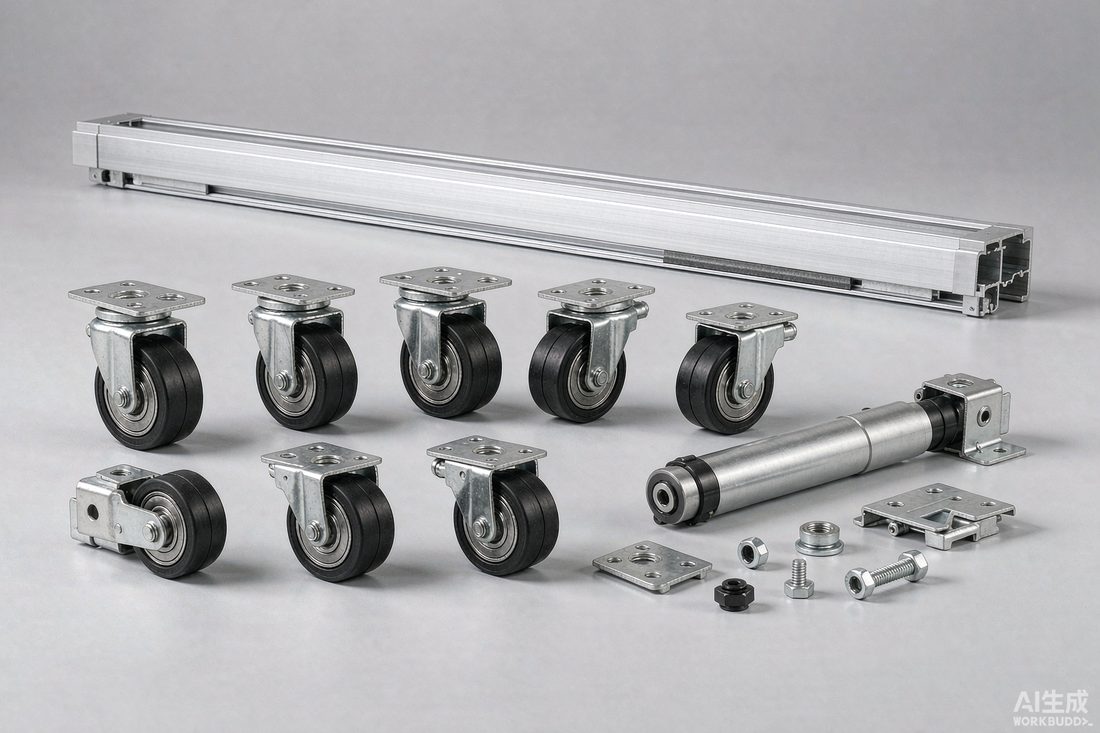
The sliding roller is the part of a wardrobe sliding-door system that most affects the user experience. North-American buyers most often agonize over bearing vs nylon — but it's not which is "better", it's which fits your door.
Bearing models (ball-bearing) have strong load capacity and stable smoothness, suited to wide solid-wood or glass doors over 40kg per leaf; the downside is dust sensitivity — a dirty track produces a faint noise. Nylon models are self-lubricating, quiet and wear-resistant, suited to medium-light panels, and don't rust, fitting humid regions.
For selection, watch three points:
- Load: leave 30% margin over door weight — e.g., a 50kg door uses a roller rated above 65kg.
- Bearing grade: look for ABEC-3 or above; cheap off-brand bearings get noisy within half a year.
- Damper config: rollers with soft-close damping avoid slamming; retail customers are very sensitive to this.
Extra reminder: half a roller's life depends on track quality. Thin-walled aluminum rail or rough surface finish will kill even good rollers early. Before ordering, confirm the roller and track as a set, not just the roller unit price.